It happened during a live broadcast.
Nothing about the setting felt unusual.
The studio lights were steady.
The host followed the script.
The audience watched calmly.
And then something shifted.
Not loudly.
Not dramatically.
But enough for people to feel it — before they understood it.
During a live television broadcast, a Muslim woman removed her burqa on camera, delivering a moment that many viewers instantly called bold, shocking, and deeply symbolic. The studio froze. The clip spread. And the debate exploded.
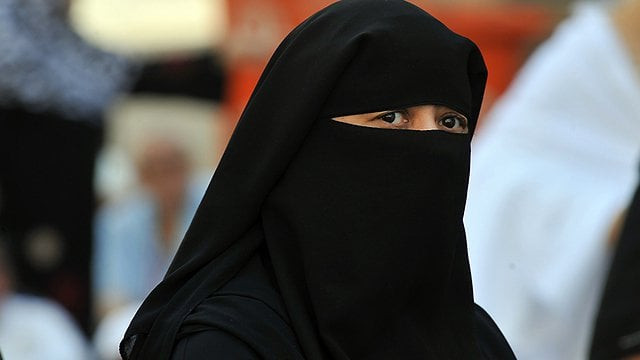
For some, the act looked like a dramatic declaration of personal freedom — a rejection of rules she felt were imposed on her body and identity. Supporters praised the moment as a stand for women’s autonomy, calling it courageous and overdue.
Across the Muslim world, the meaning of the burqa isn’t one-size-fits-all. While some women experience it as pressure or control, many others choose it freely — as faith, culture, or personal conviction. For them, removing it wouldn’t feel like liberation at all.
But others urged caution.
That’s where the controversy sharpens.
Critics warn that framing such moments as “escaping oppression” can fuel harmful stereotypes — painting Islam or Muslim women as universally silenced or enslaved. Real empowerment, they argue, isn’t about what a woman wears — or removes — but about choice.
⚡ One woman.
⚡ One live broadcast.
⚡ Two radically different interpretations.
It Wasn’t Just About the Gesture
Clips of the moment began circulating within hours.
Social media feeds filled with slowed-down replays.
People zoomed in.
They analyzed body language.
They dissected the host’s reaction.
But the debate wasn’t really about the fabric.
It was about what the act represented — or didn’t.
Two Completely Different Interpretations
For some, the removal of the burqa was seen as a powerful symbol of personal freedom.
A woman reclaiming her identity.
A bold rejection of imposed expectations.
A public declaration of autonomy.
Supporters praised her confidence.
They called it brave.
Necessary.
Long overdue.
But others urged caution.
The Context Many People Missed
Across the Muslim world, the meaning of the burqa isn’t universal.
For some women, it represents cultural pride.
For others, spiritual devotion.
For others still, it’s a personal choice detached from politics altogether.
That complexity doesn’t fit easily into a viral clip.
And that’s where the controversy sharpened.
What Didn’t Air Live
Several viewers later pointed out something subtle.
It wasn’t just the act itself.
It was the shift in the host’s posture.
The slight pause before speaking again.
The careful choice of words that followed.
It felt measured.
Intentional.
Almost cautious.
And that detail — barely noticeable — became part of the conversation.
Was It Liberation — Or Spectacle?
Critics argued that framing such moments as “liberation” risks simplifying deeply personal decisions.
They questioned whether turning it into viral content stripped it of nuance.
Others countered that visibility matters.
That representation matters.
That choice, in any direction, deserves space.
The same moment.
Two radically different readings.
The Debate Didn’t End With the Broadcast
Days later, discussion panels dissected it.
Comment sections filled with thousands of arguments.
Some said the world was overreacting.
Others said the reaction itself proved why the moment mattered.
But beneath the noise, one question remained:
Why did it feel bigger than the act itself?
The Detail That Changed the Tone
When the clip is replayed now, something stands out.
Not the removal.
Not the applause.
But the expression on her face afterward.
It wasn’t defiance.
It wasn’t triumph.
It was calm.
Measured.
Almost reflective.
And that subtle expression changed how some viewers interpreted everything.
Why Moments Like This Linger
Live television rarely allows for do-overs.
Yet this moment continues to resurface.
Re-edited.
Re-captioned.
Reframed.
Some see empowerment.
Some see controversy.
Some see projection — viewers attaching their own beliefs to a brief, human gesture.
And perhaps that’s why it refuses to fade.
In the End, It Was More Than a Clip
Whether it was an act of personal freedom or simply a personal decision made public, the moment resonated far beyond the studio walls.
Not because of the fabric.
Not because of the applause.
But because it forced people to confront their own assumptions.
And when a single gesture can spark conversations across cultures, beliefs, and generations —
It becomes more than a moment.
It becomes a mirror.
Top Articles